Wild Flora and Habitat in Nova Scotia
The Nova Scotia Wild Flora Society is dedicated to the appreciation and conservation of wild flora and habitat, especially in Nova Scotia. A non-profit organization and an affiliate of the North American Native Plant Society, the society welcomes all people who are interested in native flora. Members meet regularly on a social basis to host speakers, plan recreational field trips, and organize other events.
This web site serves to create awareness about the Nova Scotia Wild Flora Society, and to be a source of information for topics of interest to all wildflower enthusiasts.
Please read the President's Welcome.
Issues, Events, Workshops
Next NSWFS Events: Monday April 23 & Saturday April 28See Programme
April 24, 2012: HRM has released a second draft of its Urban Forest Master Plan for public review, A series of workshops will take place in mid-May at which the public will be asked to help determine priorities for the future implementation of the UFMP. See HRM UFMP
Apr. 21, 2012: Spring Mushroom Foray/Grow your own - May 11 - 13, 2012; Introduction to Plants and Ethnobotany - June 8 - 10, 2012; Writing from Nature with Harry Thurston - June 15 - 17, 2012 and MORE - see HLC Programme Details
![]()
Good News from The Avon Peninsula
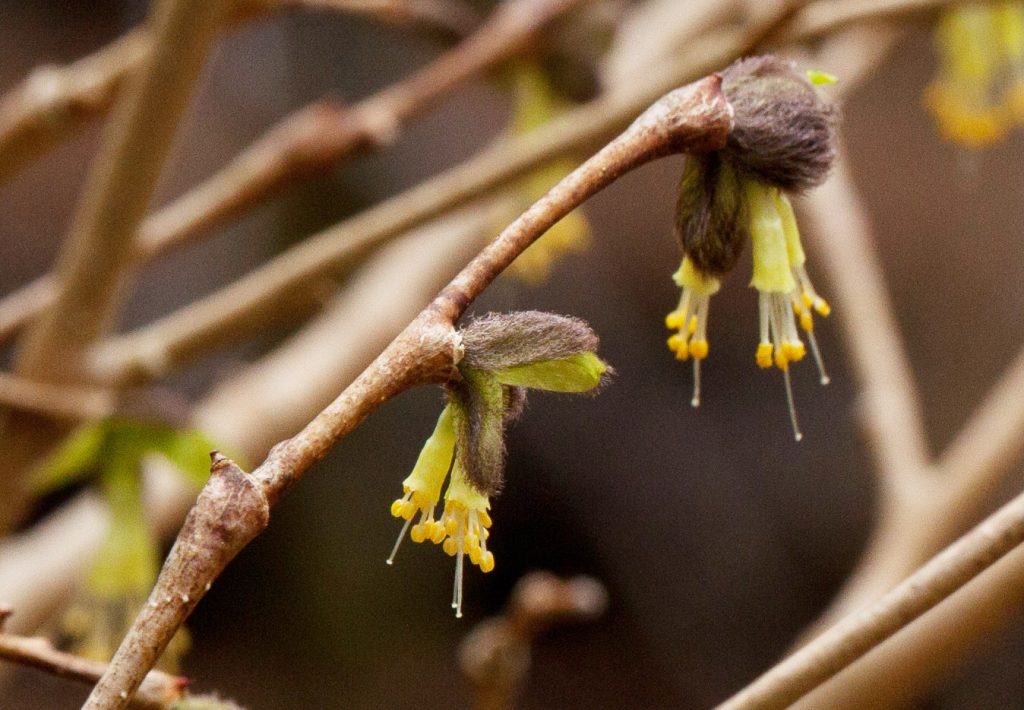
Apr. 21, 2012: "The Hepatica and Eastern Leatherwood are in bloom now. Beavers are swimming and bats are in flight. All is well on the AP." Read more
Apr21,2012 (reposted): Seven talks (March 1 to May 24th) at North End Library, Halifax, on gardening with native plants & pollinators, medicinal uses, permaculture, soil management, plant identification, edible wild plants. Organized by Ecology Action Centre.
Read more
Apr. 5, 2012: A photo-essay by JackPine posted in the Articles section of our website cites 5 species in N.S. as belonging to the guild of spring epehmerals. They are found in rich hardwood forests and intervales. The exotic and invasive garlic mustard (Alliaria petiolata) poses a threat to these species. See article
N.S. Wetland Courses
March 10, 2012: The Fern Hill Institute for Plant Conservation in assocation with the K.C. Irving Environmental Science Centre is offering four practical 3-4 day wetland courses in 2012. Details

Roland and Smith now available online
Feb 15, 2012: The Flora of Nova Scotia by A.E. Roland and E.C. Smith, published originally in the Proceedings of the Nova Scotian Institute of Science, is now available on DalSpace. Read more
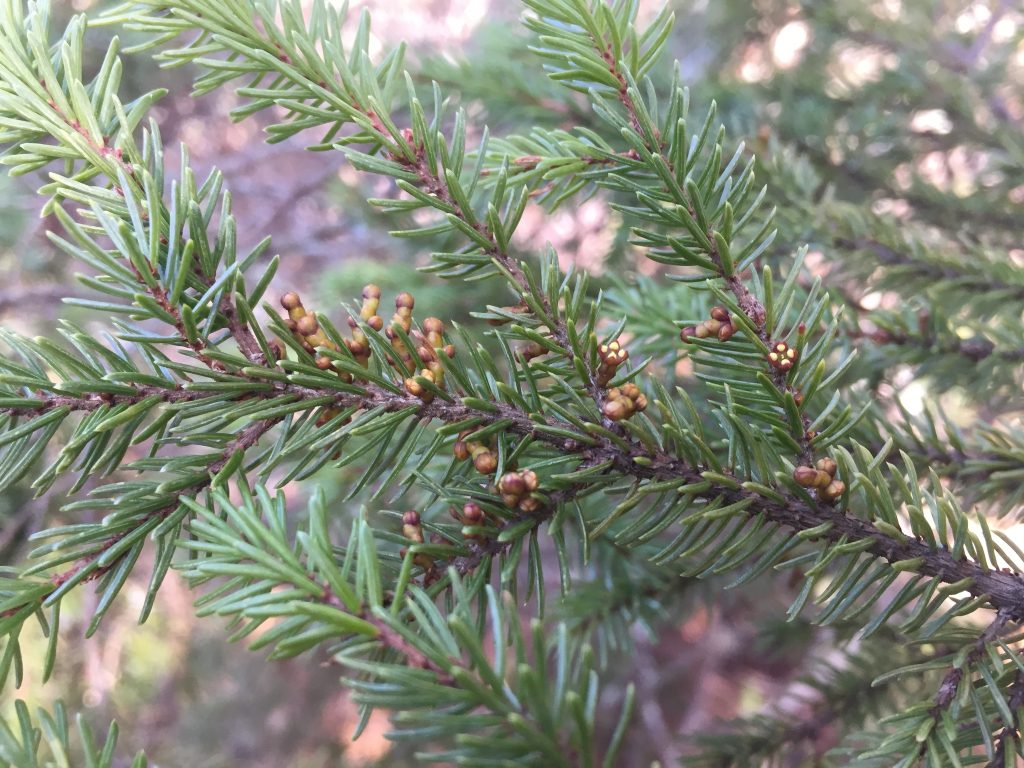
for declines in health of red spruce?
Feb. 10, 2012: The exotic brown spruce longhorn beetle (BSLB) was reported in Kouchibouguac Park, N.B. in Aug 2011, the first report for a site outside of N.S. It was first discovered in Point Pleasant Park (Halifax) in 1999. An article by entomologist Chris Majka in the current (Jan/Feb 2012) issue of Rural Delivery provides a good overview of the spread of BSLB and of the relevant issues. Read more
Dorcas Copper butterfly at Black River Fen, Inverness Co.
Jan 30, 2012: John Klymko et al. recently reported occurrence of the rare Dorcas Copper butterfly (Lycaena dorcas) in a rich calcareous fen at Black River, Inverness County. It's typically associated with shrubby cinquefoil (Dasiphora fruticosa ssp. floribunda). Read more about this butterfly and its habitat at Black River in the Journal of the Acadian Entomological Society.
Angevine LakeDec. 8, 2012: Angevine Lake is the largest lake in Cumberland county, Nova Scotia and the closest to the Northumberland Strait. It has the highest documented biodiversity for herpetological species in the province (salamanders, frogs and snakes) and is the only crown owned site for the endangered Ram's Head Lady Slipper. Read More .
Thoughts By A Stream.. and for the New Year
Jan 1, 2012: Landscape painter Mark Brennan shares scenes and sounds from the Acadian Forest in this and other video and audio recordings. The Acadian Forest, The Story So Far includes some wonderful scenes of spring ephemerals.
Deborah Wiles' Wild Flowers of Nova Scotia
Oct 6, 2011: Artist Deborah Wiles is creating a series of 50 paintings featuring Nova Scotia's wild flowers to raise funds for a modest International Artists' Retreat that she is building at a rural Nova Scotia site. Read more
Strathgartney Provincial Park in PEI: Good News.Dec 20, 2011: Strathgartney is a protected area because it contains the last example of pure beechwood. The provincial government was considering rerouting the Trans-Canada highway through Strathgartney Provincial Park. Sharon Labchuk wrote on Dec. 15th that 2,748 people signed the petition (prv. posted here). GOOD NEWS DEC 20th: The Guardian reports
After public consultations, the province will move ahead with new plans to re-align the Trans-Canada highway in Churchill, New Haven and Bonshaw without paving a portion of Strathgartney Provincial Park, says Transportation Minister Robert Vessey. "Islanders spoke, and we listened," said Vessey. "The new alignment we plan to build not only addresses safety concerns in all three communities, but it also steers clear of Strathgartney Provincial Park and nearby protected lands. We believe this new alignment greatly improves safety and efficiency, and strikes a balance between the goals of the Atlantic Gateway and the wishes of residents."Comprehensive Forest Ecosystem Classification Guides for Nova Scotia
Rosa rugosa as an invasive species on coastal sand dunes in Nova ScotiaSept. 8, 2011: A study published in 2010 by Nicholas Hill and colleagues documents invasion of coastal dunes on western Cape Breton Island and the mainland of northern Nova Scotia by Rosa rugosa, a common ornamental rose of east Asian origin, and provides evidence that the native dune communities are being negatively affected. They note that "In general, heavily colonized beaches were found adjacent to communities where extensive domestic planting and hedges of R. rugosa occurred and where escapes onto roadsides had occurred." See article.
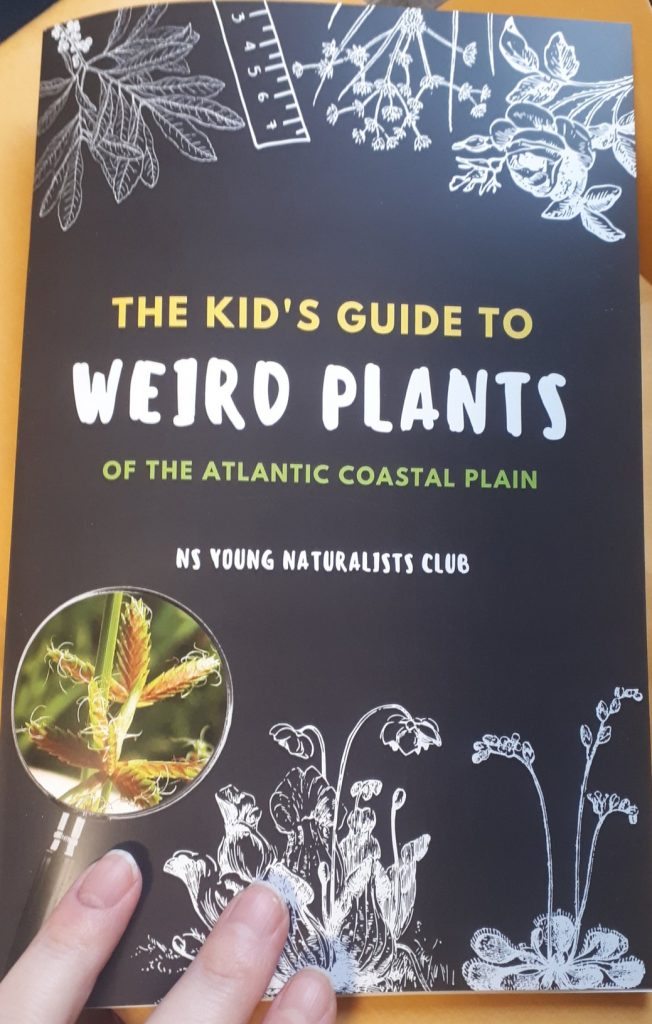
New Guide to Atlantic Coastal Plain Flora
Indian Path Common: Its Flora, Fauna & History
Recent Additions
- Lonicera villosa (mountain fly-honeysuckle)
- Lonicera canadensis (American fly-honeysuckle)
- Cardamine diphylla (toothwort)
- Fraxinus nigra (black ash)
- Fragaria virginiana ssp. virginiana (Virginia strawberry)
- Pyrola americana (American wintergreen)
Now and in the FutureBy knowing our wildflowers we can better preserve them for ourselves and for the future. Wildflowers are often abundant, but they are not indestructible - many of our loveliest ones are in danger of extinction by our carelessness. This need not happen if we observe the following rules of courtesy:
|
The text above is an excerpt from a book published in 1914. Even then, naturalists were concerned for the conservation of the wild flora! Source: Berniece Anderson & Arthur H Holmgren. 1914. Mountain Plants of Northeastern Utah. Logan: Utah State University. A revised edition is available online.